 Bangkok is a special city, the kind you don't forget. Those who love Asia are certainly familiar with it and know the excellence of its cuisine, which is often underestimated or mistaken for 'something else'. This is why we thought it appropriate to dedicate some space to the culinary art of this splendid place, where fruit, meat, fish and spices come together to create balances of flavour that are hard to find elsewhere.
If you are planning a trip to this city, find out what are the 10 dishes you absolutely must try in Bangkok.
SEE ALSO: What to see in Bangkok
1 - Kao Pad
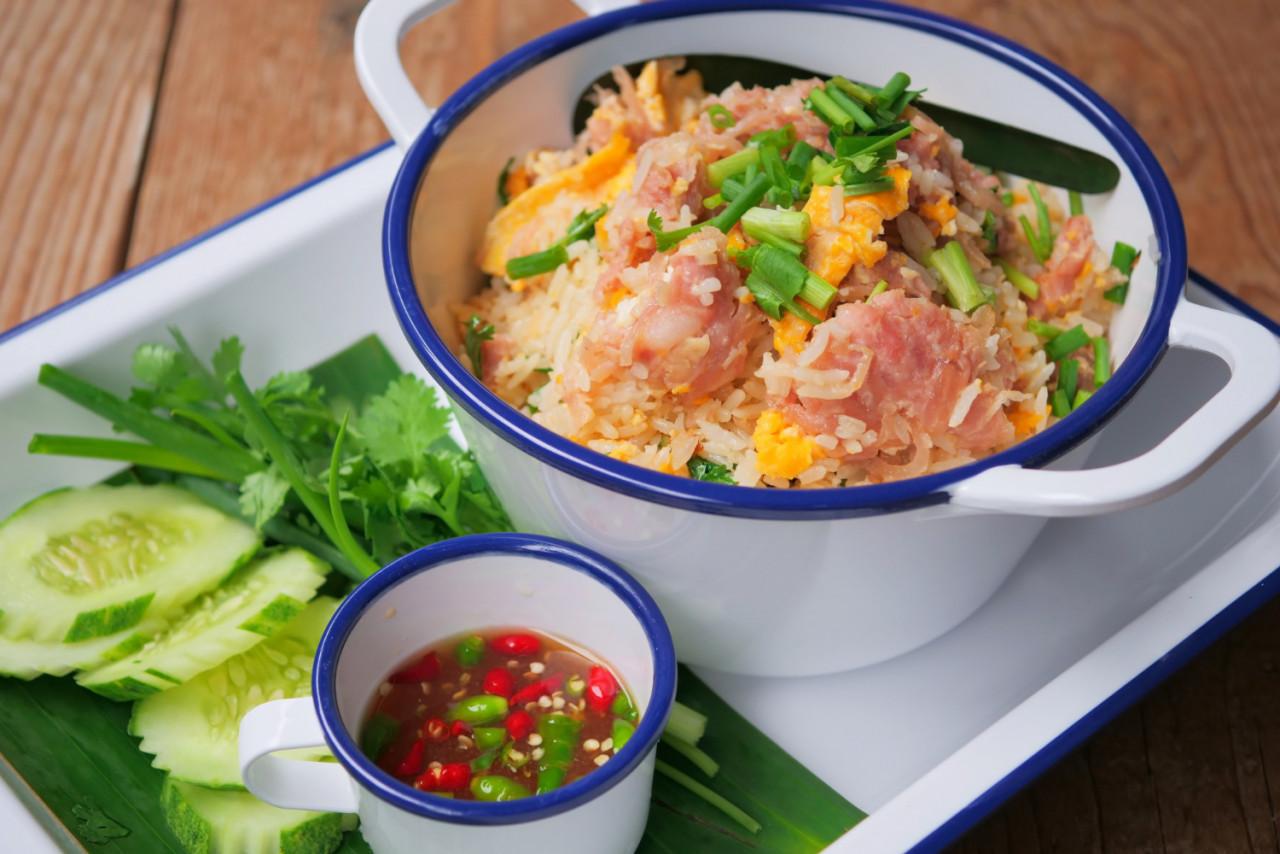 Our list starts with Kao Pad, one of Bankok's signature dishes. This is fried rice, a must in local cuisine, which is served with chicken or pork. You can also find it seasoned simply with salt and lemongrass, but the flavour will surprise you all the same.
Recommended at: lunch
Average cost: 30 bhat
Main ingredients: rice, chicken, pork
2 - Pad Thai
 Pad Thai is one of the most successful dishes abroad. It is such an important dish that it is even a national treasure, as it contains some of the most commonly used ingredients in Thai dishes. To cook it, you need the inevitable noodles, stir-fried and topped with cashews, shrimps, tamarind paste and much more.
Recommended for: lunch and dinner
Average cost: 30 bhat
Main ingredients: rice, vegetables, beans, cashew nuts, shrimps
3 - Pad Pak Bung
 This is a dish consisting of spinach-like vegetables, which are sautéed with garlic, chilli and the ever-present oyster sauce, characteristic of Thai cuisine.
Recommended for: always
Average cost: 27 bhat
Main ingredients: spinach, chilli, oyster sauce
4 - Laap
 If we talked about a vegetable-only dish earlier, now it's time for meat with Laap. This is a dish made with minced pork and seasoned with lots of chilli. Fortunately, you don't have to eat it alone. It is served with white rice, which is inevitable next to the chilli and meat.
Recommended for: lunch and dinner
Average cost: 30 bhat
Main ingredients: pork, chilli, onions, mint, lime
5 - Tom Kha Kai
 This time we go exotic with this coconut milk soup with chicken. This is a very complicated dish that needs to be made by expert hands to be tasty and maintain the right balance of ingredients. It might not be liked at first taste because of the particularity of the ingredients, but it must be tasted at least once.
Recommended for: dinner
Average cost: 129 bhat
Main ingredients: coconut milk, chicken, galengal
6 - Tom Yam Kung
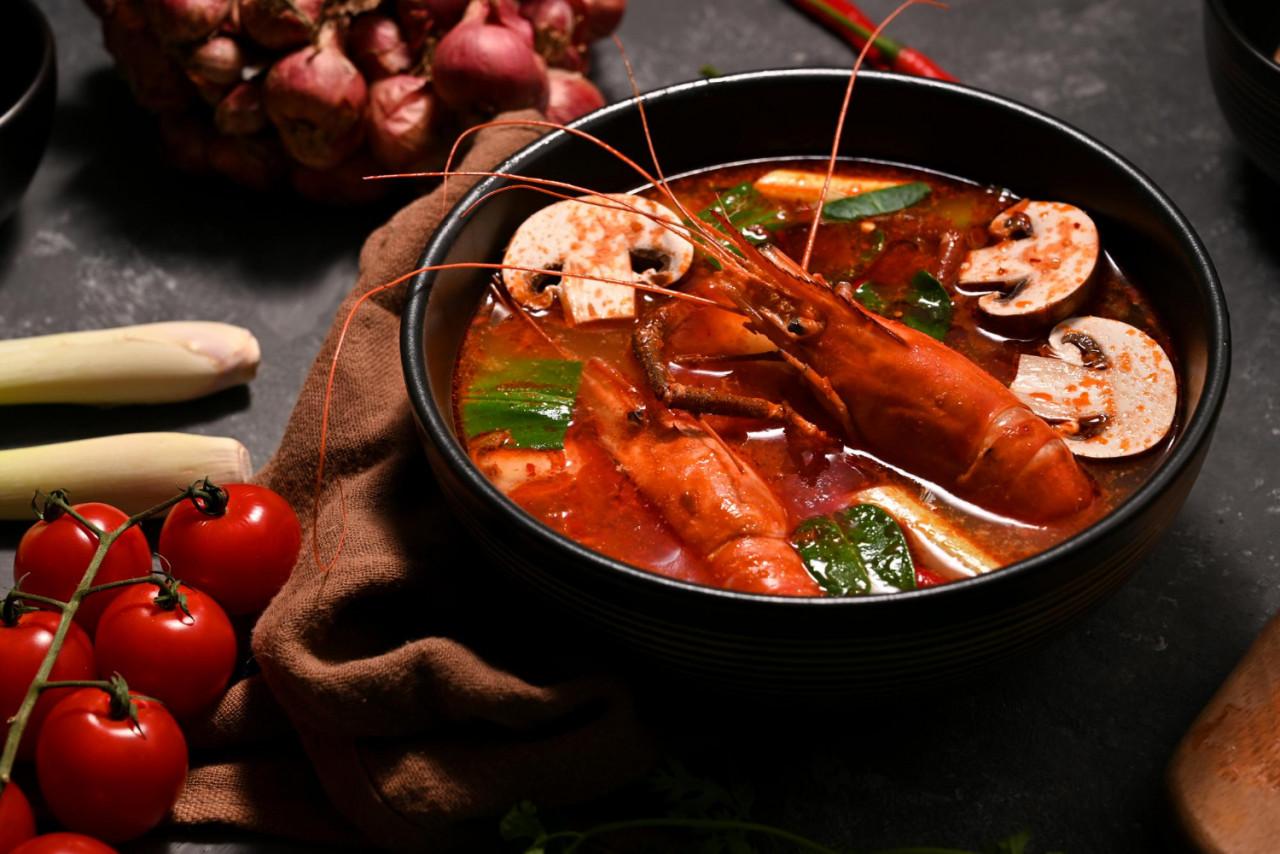
Tom Yam K ung in Bangkok is as popular as Phad Thai. It is a shrimp and mushroom soup, with tomato and the ever-present chilli. This soup must be eaten hot, so it is served in a special dish, heated by a candle underneath to keep the temperature constant.
Recommended for: dinner
Average cost: 129 bhat
Main ingredients: prawns, mushrooms, chilli, tomato
7 - Som Tam
 This is the only raw dish we have encountered so far. Som Tam is asalad with a papaya and peanut base, to which tomatoes, dried prawns, crab, fermented fish and... chilli. Don't worry though, its strong flavour is diluted by the chicken and rice served together.
Recommended for: dinner
Average cost: 79 bhat
Main ingredients: papaya, peanuts, tomatoes, dried prawns, crab, fermented fish, chilli
8 - Pad Priaw Wan Tau Hoo
 Now it is time for tofu, which we have not encountered until now. This time it is the star of a sweet dish involving pineapple, sugar and soy sauce. It is a very common dish that you can easily find in small restaurants scattered around the city.
Recommended for: always
Average cost: 149 bhat
Main ingredients: tofu, anans, soy sauce, sugar
9 - Tod Mun Pla
 If you want something quick and convenient to eat on the streets of Bangkok, you can opt for Tod Mun Pla. These are fish balls, seasoned with curry and spices. Everything is then fried to create this goodness. It is a classic street food, but you can find it 'revisited' in many restaurants in Bangkok.
Recommended to: always
Average cost: 99 bhat
Main ingredients: fish, curry, lime, spices.
10 - Oyster Omelet
 Perhaps the most Western thing you've encountered so far: the oyster omelet. This is a dish that cannot be renounced, even for an alternative breakfast. Also called Hoy Tod, it is usually served on a bed of soybean sprouts. Try it, you will not regret it.
Recommended for: breakfast, lunch
Average cost: 150 bhat
Main ingredients: oysters, egg, soy sprouts
Where to eat: best restaurants, typical places and street food
A harmonious synthesis of old and new, authentic tradition and renewed modernity, Bangkok is a city capable of offering a unique culinary offering within reach of all budgets: you can try starred and very luxurious restaurants that are nothing more than the restaurants of luxury hotels, or enjoy excellent food in the places located in the most central areas of the city (very popular with Thais themselves both for lunch and dinner).
But you can't leave Bangkok without having tried at least one of the tasty delicacies on the street food stalls. Not everyone knows that Bangkok is one of the capitals of street food, so it is very easy to come across stalls selling everything from fruit, sweets, noodles or fried chicken.
1 - The Living Room
Description: a medium-high class venue (included in the Sheraton Grande Sukhumvit Hotel), where you can enjoy meals from lunch until late in the evening, in a unique environment where you can enjoy fish and meat while listening to excellent live jazz music
Speciality: excellent cocktails for all tastes
Average price: from €30.00 per person
Address: 250 Sukhumvit Road - Get directions - Facebook page
2 - Indulge Fusion Food
Description: A restaurant with a strong western style, Asian and Thai dishes are offered but with innovative tones and totally revised features.
Speciality: Pad Thai
Average price: from €40.00 per person
Address: 403-403/1, 407-407/1 Sukhumvit Road - Get directions - Facebook page
3 - Tealicious Bangkok
Description: Authentic Thai restaurant, located in a central area of Bangkok, serving Thai dishes with the best spices from the region.
Specialities: Tom Yum soup, Pad Thai noodles and 'Somtam'.
Average price: from €15.00 per person
Address: 492 Trok To, Soi Charoen Krung 49 - Get directions - Facebook page
4 - Siam House Cafe
Description: small but nice family restaurant serving typical Thai food at really cheap prices.
Speciality: classic pad Thai
Average price: from €8.00 per person
Address: 90 Silom rd - Get directions - Facebook page
5 - Jok Phochana
Description: small and spartan place, offers a unique and unexpected dining experience with mouth-watering Thai street food.
Speciality: Pad thai
Average price: from €4.00 per person
Address: 96-98 Soi Samsen 2 - Get directions - Facebook page